Formal problem statement, vocabulary, and assumptions
Research Studio / Services
Formal systems engineering
Formal Logic and Computational Complexity Applications
A formal model should not remain trapped in notation or a static paper. I translate assumptions, variables, constraints, transformations, solution spaces, counterexamples, and proof obligations into inspectable digital systems that researchers, institutions, students, and analytical teams can operate through the web or a mobile interface.
Scope
Designed for institutions and difficult source material
Design and development of web applications, progressive web applications, mobile research tools, and interactive models for formal logic, computational complexity, SAT-style constraint systems, state spaces, mathematical structures, and verification workflows.
The engagement is structured around the actual research object and the public responsibility of the finished work. Existing data is evaluated before new collection begins, and visual design follows the evidence model rather than replacing it.
- Computer science researchers
- Formal logic and mathematics groups
- Universities and laboratories
- Interdisciplinary research teams
- Analytical institutions
- Educational technology programs
- Advanced software initiatives
- Independent researchers
Deliverables
Production deliverables
Variable, constraint, relation, and transformation architecture
Interactive solution-space or state-space explorer
SAT-style assignment and compatibility model
Proof-obligation and counterexample review interface
Responsive research web application or installable PWA
Mobile application interface for field, teaching, or review workflows
Rust-backed API and reproducible computational pipeline
Technical and methodological documentation with explicit limits
Method
Research discipline before interface spectacle
Formalize the research object
Objects, propositions, variables, domains, assumptions, transformations, admissible evidence, and the intended result are defined before interface or computation begins.
Build the computational model
Logical, combinatorial, temporal, geographic, or institutional constraints are represented explicitly as inspectable relations, rules, graphs, states, or assignments.
Design the interaction language
Abstract structures become usable controls: state explorers, dependency graphs, truth and assignment tables, model comparisons, counterexample views, and guided analytical workflows.
Separate discovery from verification
Candidate generation, heuristic exploration, computational experiments, formal obligations, and verified conclusions remain visibly distinct throughout the application.
Engineer web and mobile delivery
The model is delivered through a responsive web application, installable PWA, or mobile-oriented interface backed by durable APIs, structured data, caching, and controlled computation.
Document limits and reproducibility
Every result is accompanied by scope, model version, assumptions, unresolved obligations, counterexamples, reproducibility notes, and requirements for independent review.
Applications
Where this practice operates
SAT and constraint applications
Interactive tools for variables, clauses, compatibility conditions, assignments, satisfiability experiments, dependency structures, and search-space analysis.
Complexity and state-space explorers
Visual systems for comparing computational states, transformations, branching structures, solution regions, bottlenecks, invariants, and model behavior.
Formal logic workspaces
Web and mobile interfaces for propositions, inference rules, proof obligations, counterexamples, consistency checks, and structured reasoning.
Mathematical model applications
Operational interfaces for combinatorial, temporal, network, spatial, and multifactor models with inspectable parameters and reproducible outputs.
Conflict and geographic systems
Models joining actors, pressure, geography, time, evidence, and comparative indicators without concealing uncertainty or source status.
Education and public explanation
Accessible applications that let students and non-specialists explore difficult formal structures without reducing them to misleading simplifications.
Computational practice
Models, machines, and interpretation
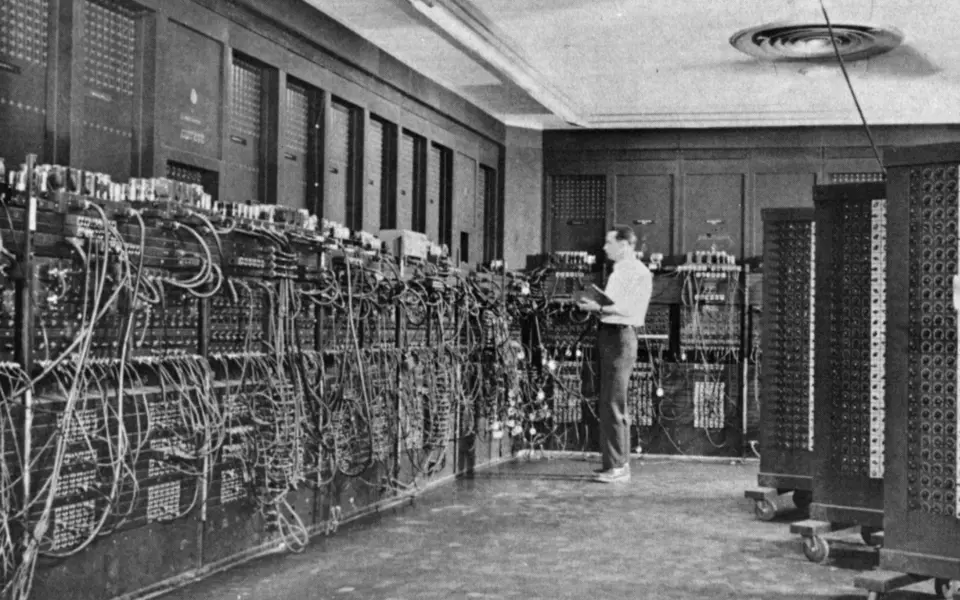
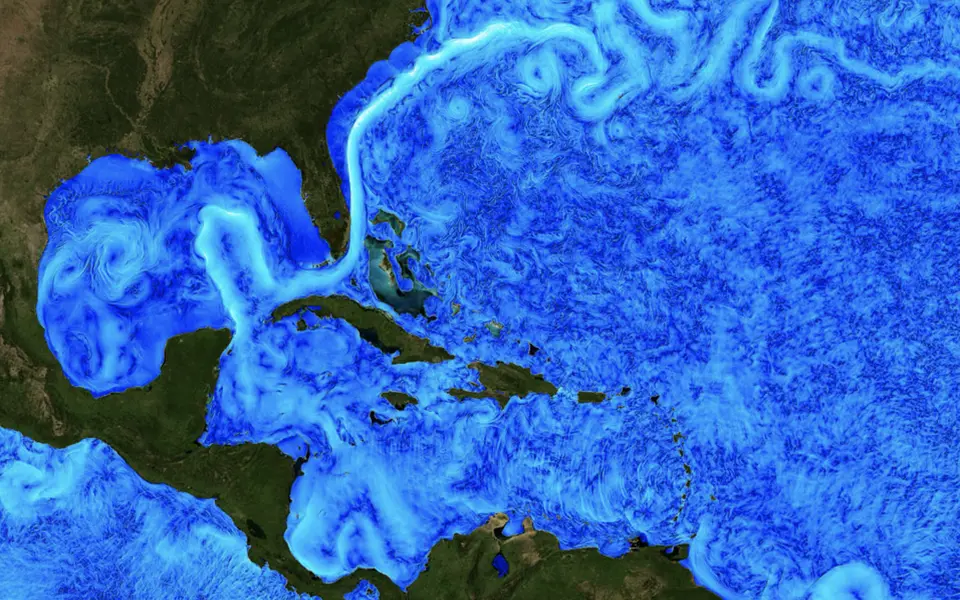
Formal reasoning becomes useful when a precise model can be computed, inspected, challenged, and communicated through a dependable interface.
Evidence of practice
Related public systems
Questions
Technical and methodological answers
Can you turn a formal or mathematical model into a working application?+
Yes. The engagement can cover formal specification, data and state architecture, interaction design, Rust-backed computation, responsive frontend development, deployment, documentation, and a maintainable public or restricted application.
Can the result work as both a web and mobile application?+
Yes. A system can be delivered as a responsive web application, an installable progressive web application, or a mobile-oriented product with a shared API and model layer. The choice depends on offline requirements, device capabilities, distribution, and the intensity of computation.
What kinds of computational complexity tools can be built?+
Examples include state-space explorers, SAT and constraint visualizers, assignment inspectors, dependency graphs, transformation simulators, model-comparison dashboards, counterexample workspaces, and interfaces for computational experiments.
Does the application claim to prove an open mathematical problem?+
No. P versus NP and other open problems remain subject to independent scientific review. Applications distinguish conjecture, experiment, candidate construction, proof obligation, counterexample, and established result instead of presenting them as equivalent.
Can formal modeling support a historical or geographic project?+
Yes. It can clarify classification rules, temporal states, evidence requirements, uncertainty, relationships, permissible transitions, and consistency conditions within a historical, geographic, or archival system.
What is delivered at the end of a modeling engagement?+
Depending on scope, the result may include a formal vocabulary, constraint model, diagrams, computational prototype, web or mobile application, API, source repository, deployment package, verification criteria, and a methodological report.
Commission
Build the system the subject requires
Begin with the research question, available evidence, geographic scope, intended audience, and required public result.
Start a project inquiry